
synopsis
“I am an old man now, but then I was already past my prime when Arthur was crowned King.” So begins Mary Stewart’s 1970 best-selling novel The Crystal Cave, which tells anew the ancient story of Myrddin Emrys, known to us today as Merlin.
Now grown elderly, he finds that his earliest memories are as bright and vivid as a newly illuminated manuscript. He remembers being six years old, so young that his days were spent with the women of his household. Even then, some said he was the son of a demon.
How did this boy — neglected, abused, averse to roughhousing — become the darkly complex sorcerer of legend? “I think perhaps you are not quite what they deem you, Merlin,” his uncle tells him. He’s right; the boy has visions.
One day, while traveling, Merlin stops before a cave. He sees a cup in a small niche among ferns. Reaching for it, he finds, half-hidden by the plants, a small carving of a god. He drinks from the cup, spilling a few drops in offering to the god, and enters the cave, setting in motion events that will reshape the world.
Deep within the titular cave is a space lined with crystal clearer than any glass he has ever known. When light shines on them, they glow with many colors: a natural magic, astonishing and pure. In the cave, he meets a skeletal old man who introduces himself as Galapas. A hermit, Galapas studies the world around him. He will lavish the same curiosity he spends on the animals around him on Merlin himself — on Merlin’s own natural magic — teaching the boy to understand all of which he’s capable.
Armed with that knowledge, the growing boy makes his way through the world, in time finding himself in the court of Ambrosius Aurelianus, a war leader with enormous ambitions: he plans to invade Britain, and, in doing so, unify it, and become its king. This will require the defeat of Vortigern, a man with ambitions of his own.
Merlin is captured by Vortigern. The warlord has ordered a fortress built; somehow, each night, the walls collapse. Advisors tell him that the walls will never stand unless a child with no father is sacrificed. “You are the son of no man,” Vortigern tells Merlin. And his blood is surely powerful…
The Crystal Cave is set in a Christian world overlaying Roman paganism like a palimpsest. Old powers linger, like crystals hidden in ancient caves. Men strive for power in bloody battles, redrawing maps and raising thrones. Through remarkable historical details and astonishing imagination, Mary Stewart breathes new life into one of the foundational myths of the western world.
The opening volume of a trilogy focused on Merlin’s life, The Crystal Cave represented a sea change in Mary Stewart’s writing life, one which startled her publishers. They needn’t have worried. The book broadened her audience, remained number one on the bestseller list for weeks, and earned a place as a favorite in the heart of many readers.
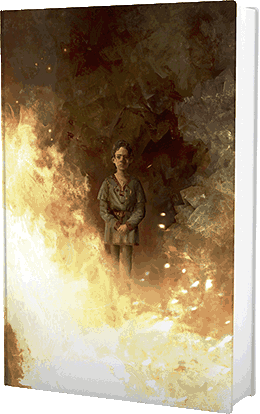
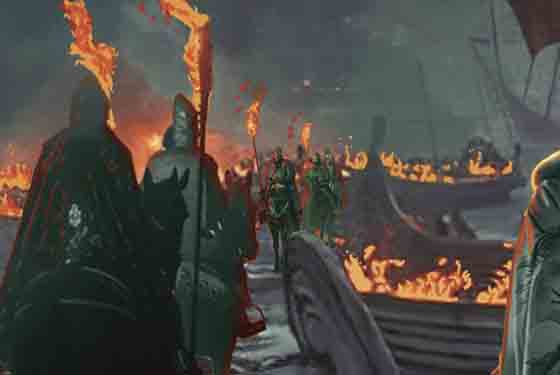
Introduced by Michael Furlong, illustrated by Doug Bell, and with double-sided dustjacket art by Ruben Hiraga, this edition of The Crystal Cave restores it to its rightful place as a classic of fantasy. It deserves a place on the shelf of anyone wishing to open a book and fall back through time and into another world.
Limited to 500 copies, each book is signed by Michael Furlong, Doug Bell, and Ruben Hiraga.
Information on The Crystal Cave
pricing
The Crystal Cave signed. $165.